Contact us today [email protected]

Our Blog

Sell My Veterinary Practice: A Veterinarian’s Complete, Real-World Guide to Getting It Right

April 16, 2024

If you’re searching “sell my veterinary practice,” you’re not casually browsing.
You’re likely weighing one of the most significant financial and professional decisions of your life.

I’ve been exactly where you are. I’ve owned, bought, and sold veterinary practices, and I've advised other veterinarians through the same process. What I’ve learned—sometimes the hard way—is this:

The outcome of a veterinary practice sale is determined long before the buyer appears.

This guide is written for U.S. veterinarians who want clarity, confidence, and control when selling their practice—without guesswork, misinformation, or costly mistakes.


Is Selling Your Veterinary Practice the Right Move Now?

Most vets don’t wake up one day and decide to sell. The decision builds over time.

Common reasons include:

  • Retirement or semi-retirement planning

  • Burnout from ownership and staffing pressure

  • Health or family priorities

  • An unsolicited corporate offer

  • Desire to de-risk personal finances

  • Wanting to stay clinical without ownership stress

Here’s the key CRO truth: You don’t need to sell now to start planning now.
In fact, practices that plan 12–36 months almost always sell for more—and with better terms.

👉 If you’re even thinking about selling in the next few years, the smartest first step is understanding what your practice is worth today.


Sale my vets


What Buyers Really Look for in a Veterinary Practice

Buyers—whether private vets or corporate groups—are not buying your history.
They are buying predictable future profit.

They focus on:

  • Consistent, transferable EBITDA
  • Associate-driven production (not owner-dependent)
  • Strong client retention and compliance
  • Preventive care plans and recurring revenue
  • Efficient systems and documented processes
  • Stable, well-led teams

The more your practice can operate without you, the more valuable it becomes.
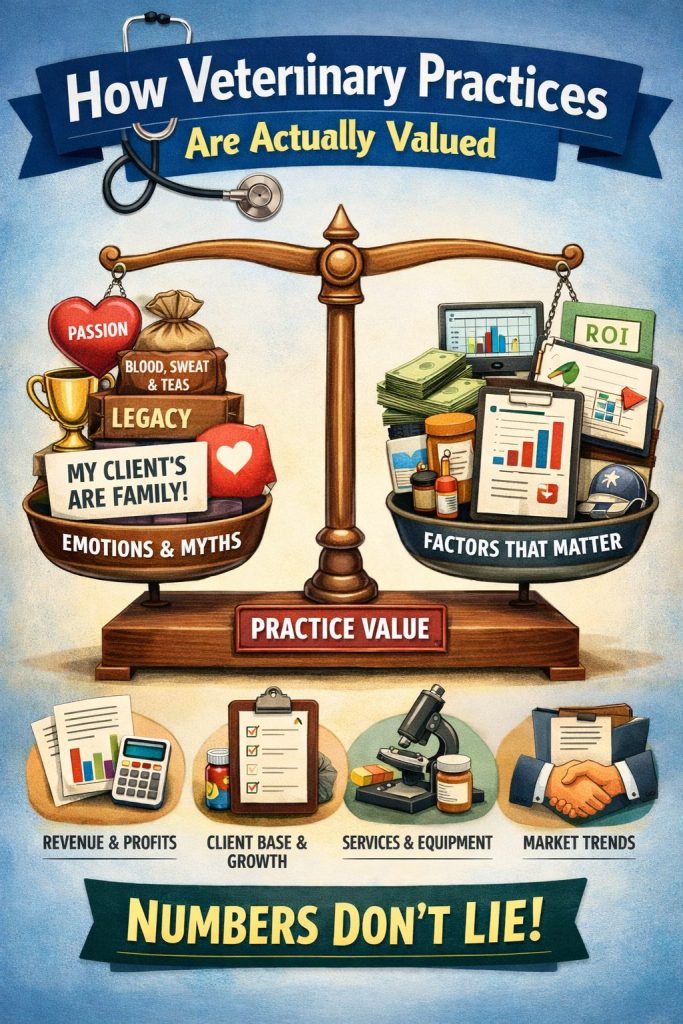
How Veterinary Practices Are Actually Valued

sellmyvetenarypractice

Forget rules of thumb and coffee-shop multiples.

A professional valuation looks at:

  • Normalized earnings (with clear add-backs)
  • Risk profile
  • Growth potential
  • Market demand
  • Buyer type

The Three Core Valuation Methods

  1. Income Approach – Values your practice based on future cash flow
  2. Market Approach – Compares to recent veterinary practice sales
  3. Asset-Based Approach – Equipment, property, and tangible assets

Most strong practices are valued primarily for income, with goodwill accounting for a significant portion of the price.

Goodwill = client loyalty, reputation, systems, and brand strength
The stronger these are independent of you personally, the higher your valuation.

How Veterinary Practices Are Actually Valued(Where Value Is Won or Lost)

Preparation is not paperwork—it’s strategy.
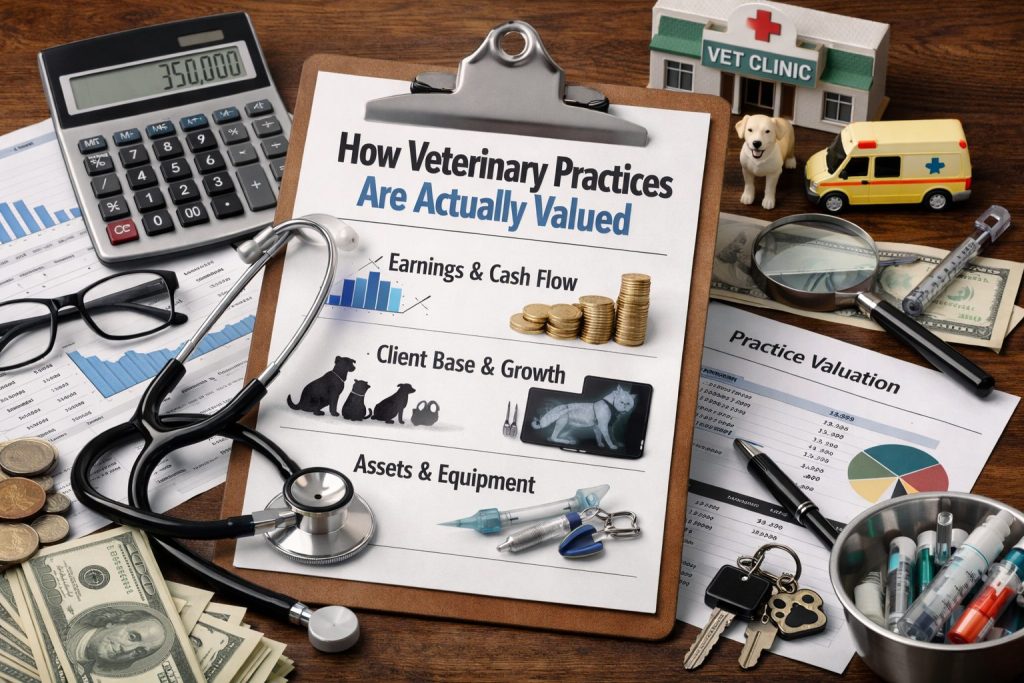
howvetsbusinessarevalued

Financial Preparation

Buyers expect:

  • Clean P&Ls for 3+ years
  • Clear add-backs (owner perks, excess comp)
  • Matching tax returns
  • Predictable monthly performance

Messy books = discounted offers.

Operational Preparation

High-value practices have:

  • Associate vets carrying production
  • SOPs for clinical and admin workflows
  • Strong practice management
  • Minimal owner bottlenecks

If your absence causes chaos, buyers will price that risk in.

Documents You’ll Need (And Why Being Ready Matters)

Expect detailed due diligence. Common requests include:

Having these ready:

  • Shortens the sale timeline
  • Increases buyer confidence
  • Strengthens your negotiating position

Private Buyer vs Corporate Buyer: Choosing the Right Exit

Selling to Another Veterinarian

selling a vets to private buyer

Best if you value:

  • Legacy and culture
  • Staff continuity
  • Personal transition

Trade-offs:

  • Longer timelines
  • Financing dependency
  • Often lower upfront cash

Selling to a Corporate Group

Best if you value:

  • Higher valuations
  • Faster closings
  • Cash-heavy deals
  • Staying on clinically without ownership risk

Trade-offs:

  • Less long-term control
  • Operational standardization

The “best” buyer is the one who aligns with your financial and lifestyle goals.

Negotiating the Deal (Price Is Only One Variable)

Many vets fixate on the headline number. Experienced sellers focus on:

  • Cash at close
  • Earn-outs and holdbacks
  • Non-compete scope
  • Post-sale employment terms
  • Seller financing exposure

A clean, well-structured deal often beats a higher—but riskier—price.

Taxes: What You Keep Matters More Than What You Sell For

Poor tax planning can cost you more than a bad negotiation.

Key considerations:

  • Asset sale vs stock sale
  • Purchase price allocation
  • Capital gains exposure
  • State and federal implications

Tax strategy should be discussed before you sign a letter of intent.

The Closing Process (What to Expect)

Most transactions follow this path:

  1. Valuation and buyer outreach
  2. Letter of Intent (LOI)
  3. Due diligence
  4. Legal and regulatory approvals
  5. Financing and closing

Preparation and transparency are what keep deals from stalling—or collapsing.

Life After the Sale: What Most Vets Don’t Anticipate

Even successful sales can feel emotional.

The best transitions happen when:

  • Staff are informed at the right time
  • Clients experience continuity
  • Your post-sale role is clearly defined

Whether you stay on, step back gradually, or move on entirely, planning for after the sale is just as important as the sale itself.

Thinking about selling your veterinary practice—now or in the future?
The smartest next step is understanding what your practice is worth and what buyers would actually pay.

👉 Request a confidential veterinary practice valuation and exit consultation.

Frequently Asked Questions About Selling a Veterinary Practice

How long does it take to sell a veterinary practice?

Most sales take 6–12 months, depending on preparation, valuation, and buyer type.

How do I know when the right time to sell is?

The best time is when profits are stable, associates are in place, and you’re not under pressure to sell.

Do I need a broker to sell my veterinary practice?

You don’t have to—but experienced brokers often increase valuation, reduce risk, and shorten timelines.

Can I stay on after selling my practice?

Yes. Many deals include post-sale employment or medical director roles.

Will my staff be told immediately?

No. Disclosure timing should be strategic to avoid disruption and staff loss.

Are corporate buyers still paying strong prices?

Yes, for well-run practices with strong cash flow and reduced owner dependence.

What hurts a veterinary practice valuation the most?

Over-reliance on the owner, inconsistent profits, poor records, and weak associate coverage.

Is a free valuation really accurate?

A professional valuation provides a realistic market range, not a guess or a rule of thumb.

Testimonials

5

The owners of this innovative flat roofing company in Southern California had recently relocated to Florida to be closer to family. Our team generated 106 interested buyers. At the outset, they had sought a full sale of the business, but after our team identified a buyer seeking a partnership, we collectively shifted focus to find the right solution for all parties. Navigating licensing hurdles and location constraints, our team assisted the owners with deal structure: sell 50% of the business to the new owner and gradually phase out of the business. This allowed the new partner time to obtain proper licensure and preserved significant cash flow for the owners while they oversaw a slow transition over several years. All sales look different, and the deal innovation for this company ensured a positive outcome for all.

Roofing Contractor

5

Luxury optical retailer with two stores, dominant in one metro area. The business is profitable, has a loyal, repeat customer base, and has a unique brand and sales process. Exit challenges were: a) the financials were not"buyer ready" and b) most buyers were local and did not have a bigger vision and price in mind. Our team provided strategic advice to the accounting firm and the owner to overhaul the accounting system, resulting in buyer-ready financials. Our team attracted an international strategic buyer who paid an amount that was much higher than that oflocal buyers and met client expectations.

High End Optical Retailer

5

Niche manufacturer of safety barriers for a broad range of industries, such as aerospace, manufacturing and oil and gas, that dominates with a technological advantage from a long history of testing data. Our team cultivated 125 buyers and multiple offers. Our team exceeded client expectations with a final sale price that far exceeded other brokers ' estimates and with a majority cash at closing. The transaction offered unique tax advantages, and our team engaged the right tax experts to address them. The clients retired in Costa Rica.

Safety Barrier Manufacture

5

I was impressed that this was a female-led business, and after speaking with several other brokers, I found the team more authentic and caring than those I had spoken to. I would not have been able to sell my business with them.

Flipsisters

4

This was our first time selling a business, and Britt put us at ease as she helped us navigate the process. Her communication was excellent. If she wasn’t able to answer my phone calls, she always returned them promptly or sent a text or email with the time she would get back to me. This team was highly organised and provided tools for us to enter the necessary information requested by the buyers. The CFO and due diligence team were also extensive and efficient, helping to streamline the process and keep everything on track. We would definitely use Earned Exits again.

Smash My Trash

3

The company provided state-licensed potable water to residential and commercial customers throughout West Texas for 25+ years, building a reputation as a reliable, high-quality drinking water provider. Over 175 buyers actively participated in the sales process, indicating significant interest in the company and validating our marketing plan for this client. Notably, seven initial qualified offers were received, all within 89% of the asking price. Our team created deal tension by securing three final offers above asking price, resulting in significant cash at closing ($10+ million) and a seller note at an attractive 9% interest rate.

Water Hauler

5

With over 6,800 restaurants worldwide. Dairy Queen is one of the top franchises in the world and has 95% consumer brand recognition. After running two DQ franchises in Kansas for 17 years, the owners were ready for their next stage of life. Our team worked with 95 buyers interested in purchasing the two franchises, allowing the new owner to be semi-absentee given the tenure and experience of current management in place at both stores. Our team oversaw multiple offers, resulting in a sale value over the asking price. With attention to detail in working with the Dairy Queen Corporate Franchise Transition group, we exceeded our expectations by finding the right buyer at the right time.

Dairy Queen Franchise

© 2026 A.E. Business Brokers.  For Business Appraisal Near Me

All Rights Reserved.

linkedin facebook pinterest youtube rss twitter instagram facebook-blank rss-blank linkedin-blank pinterest youtube twitter instagram